
Does homeowners insurance cover water leaks in Florida?
Homeowners insurance in Florida sometimes covers water leaks, but it depends on whether the leak was sudden or gradual. Sudden, accidental leaks are often covered, while slow leaks from wear may not be. This guide explains the difference, common exclusions, and the steps to take after you find a leak. Short answer: sometimes. Long answer: it depends on whether the leak was sudden or gradual, and your policy’s fine print matters more than you’d think. Here’s how it actually works in Florida.
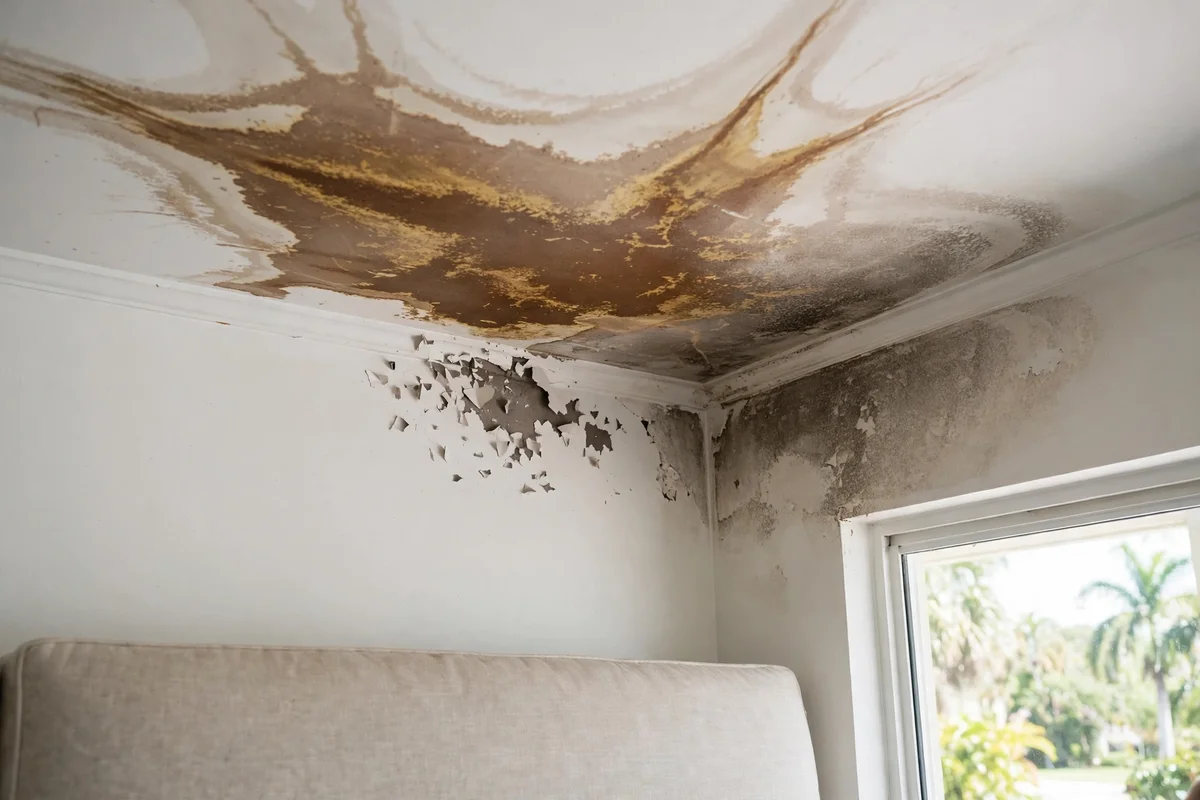
Homeowners insurance can cover water leaks in Florida, but the specifics depend on the nature of the leak and your policy. Generally, sudden and accidental leaks are covered, while gradual leaks may not be.
Knowing the fine print of your homeowners insurance policy helps Sarasota homeowners. This article explores what types of water leaks are typically covered, common exclusions, and what steps to take if you experience a leak.
Does homeowners insurance cover water leaks?
In Florida, homeowners insurance is designed to protect against unexpected events, including water leaks. A burst supply line, a failed angle stop under a sink, or a cracked toilet flapper can each release a large volume of water in a short time, and the failed part itself is usually not covered even when the water damage it caused is. Most policies cover sudden and accidental leaks, such as those caused by burst pipes or malfunctioning appliances.
Here is the split most homeowners miss: the repair itself — replacing the failed pipe, valve, or flapper — is usually not covered, while the water damage that a sudden leak caused often is. The Insurance Information Institute lists accidental discharge of water from a plumbing system as a covered peril in standard homeowners policies, so the wet drywall and flooring from a burst pipe are often covered even though the burst pipe itself is not. Check your own policy, since its exact wording decides what is covered.
Types of water leaks covered by homeowners insurance
Homeowners insurance generally covers the following types of water leaks:
- Sudden leaks: These include burst pipes or leaks from appliances like dishwashers or washing machines.
- Accidental leaks: Damage from leaks that occur unexpectedly, such as a roof leak after a storm.
- Water damage from firefighting efforts: If firefighters use water to put out a fire, the resulting damage is often covered.
However, coverage can vary based on your specific policy and provider. It's essential to review your policy for details.
Common exclusions in homeowners insurance
While many water leaks are covered, there are common exclusions that homeowners should be aware of:
- Gradual leaks: Damage from slow leaks, like a dripping faucet, is typically not covered.
- Lack of maintenance: If a leak occurs due to neglect or poor maintenance, your insurer may deny the claim.
- Flood damage: Standard homeowners insurance does not cover flood-related damage, which requires separate flood insurance.
Understanding these exclusions can help you avoid surprises when filing a claim.
What to do if you have a water leak
If you suspect a water leak in your home, take immediate action to minimize damage:
- Shut off the water supply: Locate the main water valve and turn it off to prevent further damage.
- Document the damage: Take photos of the affected areas and any belongings that may have been damaged.
- Contact your insurance company: Notify your insurer about the leak and follow their instructions for filing a claim.
- Call a professional: For leak detection and repair, contact a reliable service like leak detection Sarasota FL.
When to call a professional
Knowing when to call a professional keeps a small leak from turning into a bigger repair. If you notice signs of a leak, such as water stains, mold growth, or a sudden increase in your water bill, it's time to reach out for help. In Sarasota, pipe leak repair Sarasota FL services can quickly address these issues, preventing further damage to your home. A technician traces the break with a moisture meter and thermal imaging, then names the failed fitting, a copper supply line, a PEX joint, or a PVC drain connection, so the claim file names the actual part.
Keep exploring