
Irrigation leaks: how to tell if your sprinkler system is wasting water
A sprinkler system can lose water for months without a single puddle on the surface. A cracked lateral line, a stuck valve, or a head that sprays the driveway instead of the grass all waste water the same way: quietly, zone by zone, every time the timer runs. This guide shows how to spot an irrigation leak in a Sarasota yard, check each zone yourself, and know when the problem needs a professional look.
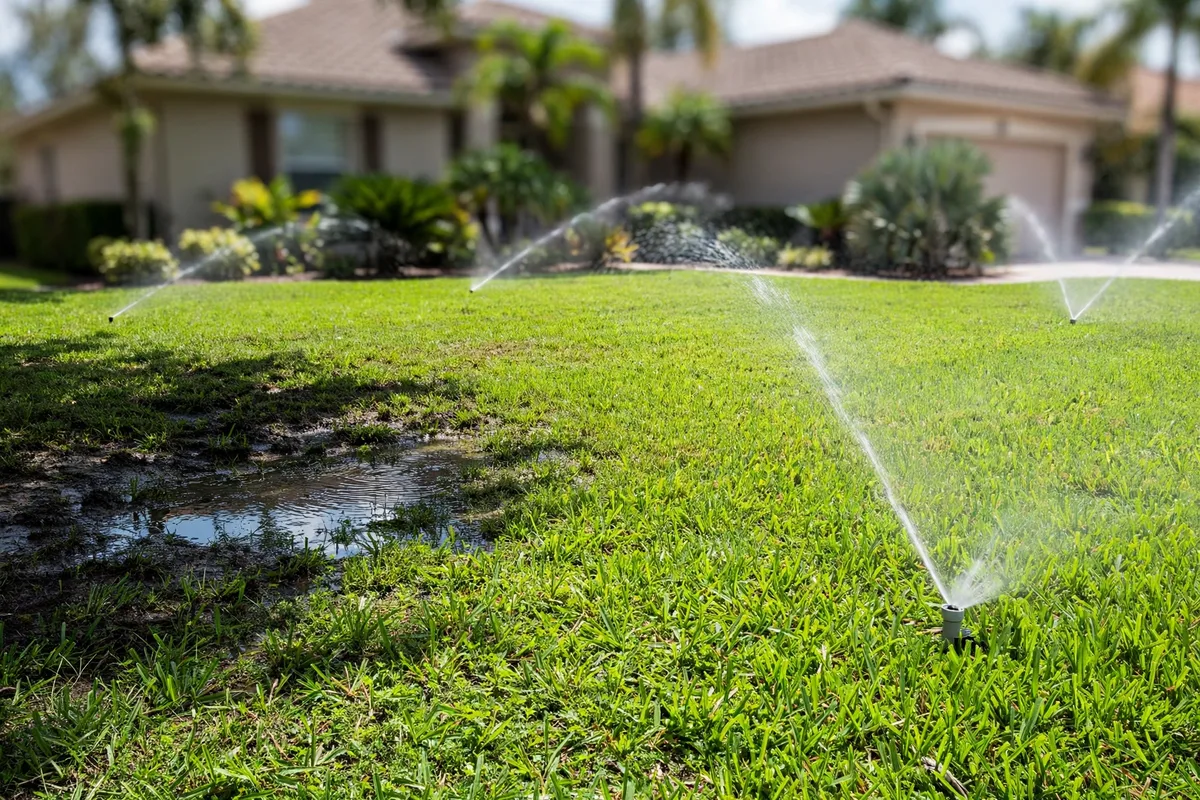
A sprinkler system can lose water for months without a single puddle on the surface. A cracked lateral line, a valve that never fully closes, or a head that sprays the driveway instead of the grass all waste water the same way: quietly, zone by zone, every time the timer runs.
Sarasota yards make the problem easy to miss. Sandy soil drains fast, St. Augustine grass forgives a lot of extra water, and a leak under a lawn rarely shows the way a leak inside a house does. This guide shows how to spot an irrigation leak, check each zone yourself, and know when the problem needs a professional irrigation leak repair visit.
Why irrigation leaks hide so well in Sarasota yards
Most of an irrigation system sits underground, so a leak rarely announces itself. Water from a cracked lateral line sinks into sandy soil instead of pooling on the grass, and a zone valve that sticks open can run water through a line long after the controller has moved on to the next zone.
The lawn itself hides the evidence too. One zone getting extra water often looks like the healthiest part of the yard, not the broken part. Homeowners sometimes water that spot even more, thinking the rest of the lawn is struggling, when the wet patch is the symptom.
Seasonal use adds another layer. Many Sarasota systems run on a timer with little day-to-day attention, so a leak that starts in one season can run through the next before anyone walks the yard with the system on. The first real sign is often a water bill that jumps without a change in use.
The signs your sprinklers are wasting water
An irrigation leak leaves a pattern if you know what to look for. Walk the yard while the system runs, then walk it again the day after, and compare what you see:
- A patch of grass that stays soggy or spongy between watering days, while the rest of the lawn dries out.
- One zone that looks much greener or grows much faster than the zones beside it.
- Water pooling around a sprinkler head, a valve box, or along the edge of a bed.
- A head that sprays weakly, misting into the air instead of throwing a steady arc.
- A zone that never seems to shut off, with heads that weep or dribble after the cycle ends.
- Erosion, washed-out mulch, or a small sinkhole forming near a line.
Any one of these signs is worth a closer look. Two or more in the same zone usually point to the same spot: a line, a valve, or a head that is no longer holding water where it belongs.
How to check each zone without digging
You can narrow a leak to one zone with nothing more than the controller and a walk around the yard. Run one zone at a time and watch it from start to finish:
- Turn the controller to manual and run a single zone for a few minutes.
- Watch every head in that zone. Note any head that sprays weakly, sprays sideways, or does not pop up at all.
- Look at the ground between heads for wet spots, bubbling, or water running where no head is spraying.
- When the zone stops, wait a minute and check whether any head keeps dribbling. A head that weeps after shutoff often means the zone valve is not closing.
- Repeat the same walk for every zone, and write down which zones look wrong.
The valve boxes deserve their own look. Lift the lid and check for standing water inside the box when the system has been off for a while. A dry box is normal. A box that holds water points to a valve that leaks through, and that is one of the most common irrigation failures in Sarasota yards.
Check the system the way it runs. A zone that looks fine from the driveway can tell a different story up close. Walk each zone while it runs, and check the valve boxes after it stops. The leak is usually in the zone that behaves differently from the rest.
What the meter test shows about your irrigation
When the yard gives mixed signals, the water meter settles the question. The test is simple: turn off every water use in the house, then turn off the irrigation controller too, and read the meter. Wait without using any water, then read it again. Movement with everything off means water is leaving the system somewhere.
To point the test at the irrigation alone, run it twice. First, read the meter with the irrigation controller off and the house quiet. Then turn the irrigation back on for one normal cycle and read the meter again after the cycle ends. A meter that keeps moving after the cycle points to the irrigation side, while a meter that moves with the irrigation off points to the house side.
This is the same meter check described in the guide to why a water bill jumps when a hidden leak is running, applied zone by zone. It will not tell you exactly which lateral line cracked, but it will tell you whether the irrigation is the problem, and that is the answer that shapes the next step.
Sprinkler leak or just Florida evaporation?
Florida heat makes every yard lose water to the air, so it is fair to ask whether a dry-looking lawn is a leak or just a hot week. The difference is the pattern. Evaporation dries a lawn evenly. A leak keeps one spot wet, one zone green, or one head dribbling while the rest behaves normally.
| What you see | Points to a leak | Points to heat and evaporation |
|---|---|---|
| Wet patch | Stays soggy between watering days | Dries out between cycles |
| Grass growth | One zone grows much faster than the rest | Growth is even across the yard |
| Heads after shutoff | A head keeps weeping or dribbling | Heads stop cleanly when the zone ends |
| Meter with irrigation off | Keeps moving with everything off | Holds still with everything off |
| Water use | Climbs while watering habits stay the same | Tracks the watering schedule and the season |
A pool can raise the same question in a different part of the yard. If the pool level keeps dropping while the lawn stays wet, the guide to telling a pool leak from evaporation in Florida heat walks through the bucket test that separates the two. The EPA's WaterSense program also shares guidance on watering efficiently, which helps you tell normal use from a leak.
The sprinkler parts that fail first
Most irrigation leaks come from a short list of parts. Knowing which ones fail helps you describe what you see when you call, and it keeps a small fix from turning into a dug-up yard.
Zone valves. The valve opens and closes each zone, and its seal wears with every cycle. A valve that sticks open lets water seep through the line all day. A valve box that holds standing water is the usual sign.
Sprinkler heads and risers. Mower wheels, foot traffic, and shifting soil crack heads and snap risers. A cracked head sprays sideways or mists, and a snapped riser can flood one spot while the rest of the zone goes dry.
Lateral lines. The lines that carry water to the heads sit shallow in sandy soil, so roots and ground movement can crack them. A lateral leak rarely surfaces as a puddle. It shows as a soggy patch, a fast-growing strip of grass, or a zone that never quite waters evenly.
Fittings and connections. Joints where lines meet valves and heads loosen over time, especially where water pressure runs high. A water pressure regulator that is failing can push pressure past what the fittings were built to hold, and the weakest joint gives way first.
Mistakes that let a small irrigation leak run for months
Irrigation leaks last so long because the system runs on a timer and nobody watches it. A few habits make that worse:
- Watering on a fixed schedule without ever walking the zones while they run.
- Treating a soggy patch as overwatering and turning the timer down, which hides the symptom without fixing the line.
- Ignoring a head that mists or sprays sideways because the grass still looks green.
- Assuming the meter only matters when the bill arrives, instead of reading it when something looks off.
The fix for all four is the same habit: a short walk of the zones once a month while the system runs. It takes a few minutes, and it catches most irrigation leaks while they are still small. If the walk turns up a zone that behaves oddly, the steps in the guide to what to do first when you find a water leak apply here too: shut the water to that zone, note what you see, and get the leak located before it spreads.
When to call for irrigation leak detection
Call when the checks point to the irrigation but not to a single spot: a meter that moves with the irrigation off, a zone that weeps after shutoff, or a soggy patch with no visible break. Those signs mean the leak sits underground or inside a valve, and finding it takes thermal imaging and acoustic listening gear that pinpoints the spot without digging up the yard.
Sarasota Leak Detection & Repair checks irrigation systems zone by zone, finds the line or valve that is losing water, and lays out the repair choices before any work begins. If you are leaving your Sarasota home for the season, that check is worth doing before you go, so a quiet leak does not run the whole time you are away.
Keep exploring