
Unexpected Spike in Water Bills
If your water bill spikes unexpectedly, it may indicate a hidden leak. Addressing this early can prevent further financial loss.
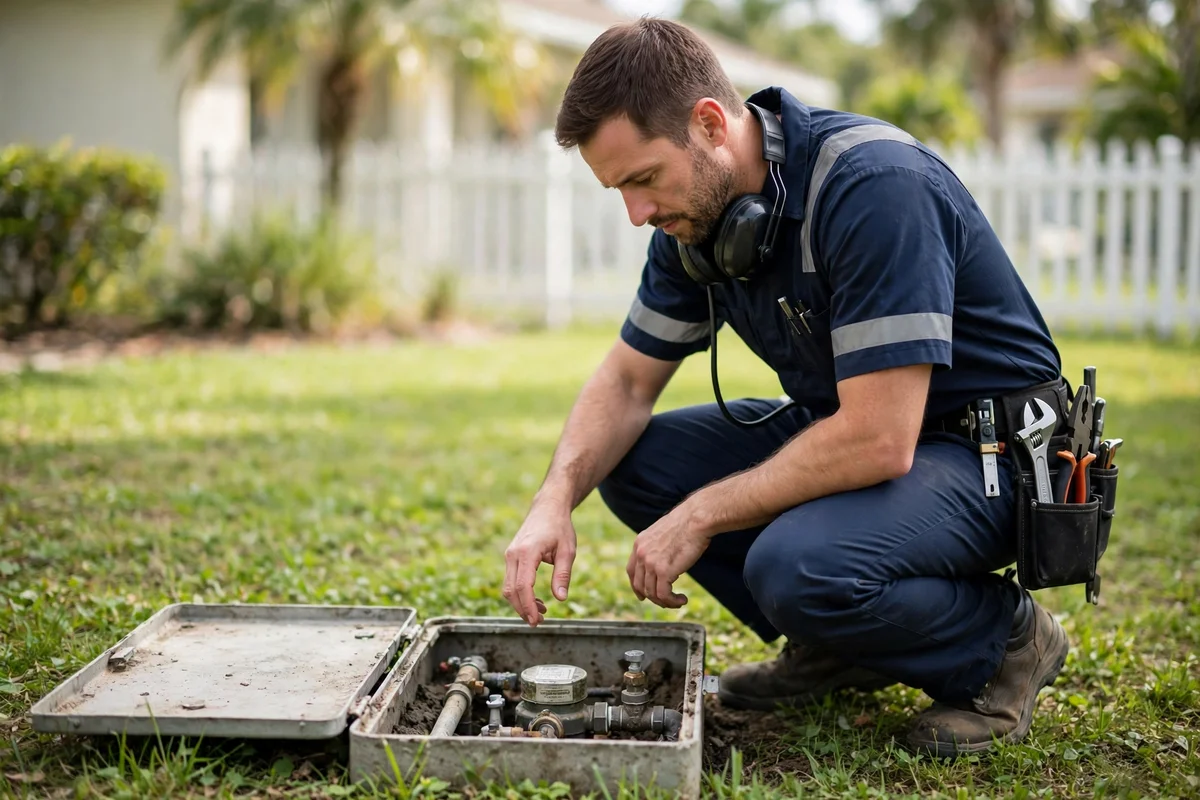
Your local team · Port Charlotte
Port Charlotte’s canal homes went up mostly in the 60s through the 80s — original copper, galvanized, and plenty of polybutylene. Add harbor salt air on top. That’s a lot of aging pipe, and most of it is hiding under concrete slabs.
Local knowledge
Port Charlotte was laid out by the Mackle brothers starting in 1954, with 165-plus miles of canals lined by 1960s–80s ranch homes. Original copper, galvanized, and polybutylene still define the leak landscape here. Port Charlotte Beach and Deep Creek sit on Charlotte Harbor, where a high water table and humid summers keep the soil damp. Canal-side ground shifts easily, and that movement stresses old joints until one of them gives — often a slab leak found with thermal imaging cameras before the floor shows it.
Warning signs
If your water bill spikes unexpectedly, it may indicate a hidden leak. Addressing this early can prevent further financial loss.
Damp patches on walls or ceilings often point to a leak. This can lead to mold growth and structural damage if not fixed promptly.
Puddles in your yard can signal a broken irrigation line or a slab leak. Worth investigating before the damage spreads.
Bad smells may indicate sewage leaks or stagnant water, which require immediate attention to ensure safety and hygiene.
Experiencing low water pressure can be a sign of a leak in the plumbing system. This issue should be addressed to restore normal flow.
Stains on canal-facing pipes and fittings mark slow weeping where salt air and canal humidity corrode joints. The stain color and location show which joint weeps, even when no drip appears during a daytime visit. Checking those fittings after humid nights catches weeping joints before they split open.
Built around the city
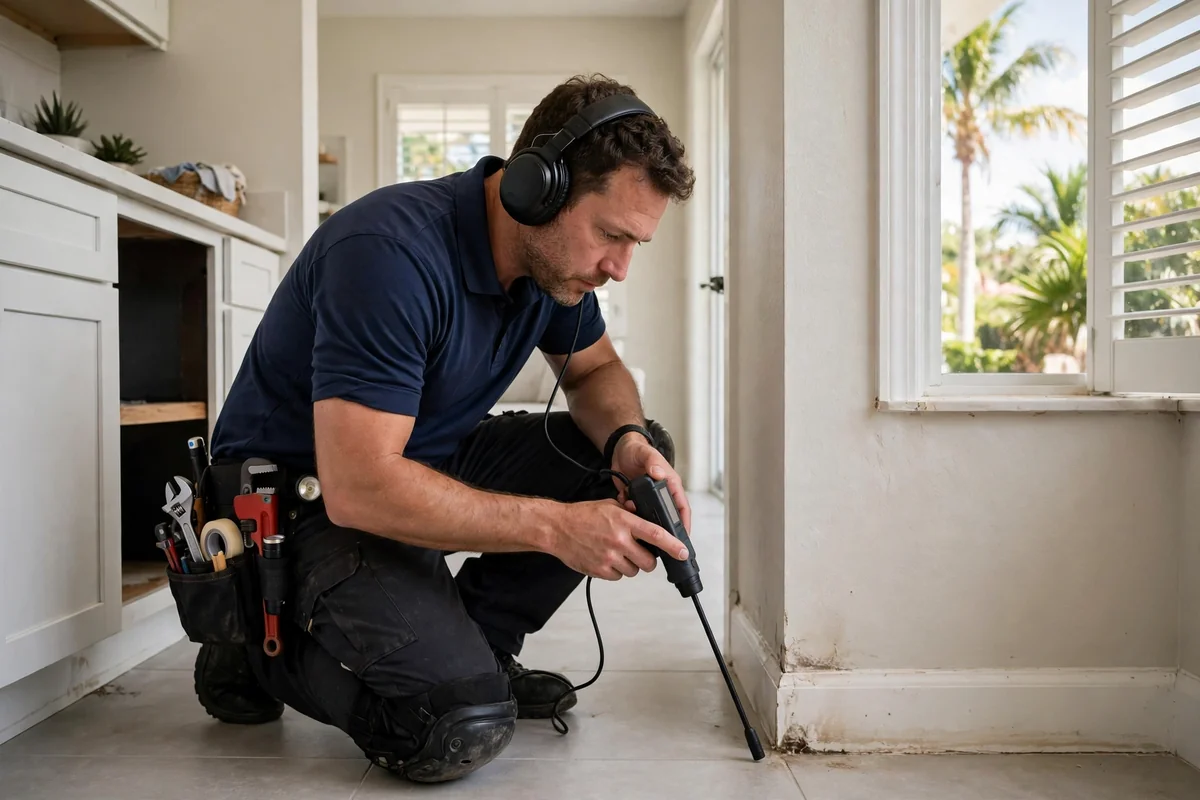
Leak detection here is shaped to Port Charlotte’s climate and canal-side homes. Thermal imaging cameras and acoustic listening gear locate leaks accurately, without opening anything up. Scheduling is flexible, and local regulations and codes are familiar ground for the crew. Property access gets factored in, so the service stays prompt.
A high water table can worsen leaks and make them harder to locate. This can lead to increased damage if not addressed quickly. Groundwater and plumbing leaks look alike — the right methods tell them apart.
Many homes in Port Charlotte are older, making them more susceptible to leaks due to outdated materials. Weak spots in older plumbing get spotted, with a repair or replacement to match.
A storm can cause significant plumbing issues, including flooding and hidden leaks. Emergency detection runs before and after storms, keeping damage down.
The Florida Building Code — Plumbing outlines the standards for plumbing installations and repairs, ensuring that our work complies with local regulations.
Port Charlotte canal lots sit on sandy, water-adjacent soil that shifts with canal levels and storms. The crew follows the line path from the house toward the canal side, testing soil moisture along the way. A wet strip that follows the line path, rather than spreading evenly, marks the break zone.
Florida seasons
Port Charlotte sits on Charlotte Harbor with a grid of canals threading through its neighborhoods. Many homes are mid-century builds beside newer construction, so galvanized, copper, and PEX all appear. A high water table and humid summers keep soil damp, and canal-side ground shifts easily, stressing joints and slab lines over time.
Canal levels rise and soils saturate. In 60s–80s ranch homes with rigid original pipes, seasonal soil movement cracks joints, peak slab-leak season.
Charlotte Harbor surge pushes water against canal-front foundations. After storms, check for new moisture, especially in low-lying canal neighborhoods.
Irrigation runs hardest. Cracked laterals and stuck valves cause the dry-season bill spikes we trace most often in Port Charlotte.
Harbor breeze never stops corroding exterior metal. Annual inspection of hose bibs, pool connections, and water heater fittings catches leaks at their source.
Services available in Port Charlotte
Canal-home plumbing from the 60s to the 80s — here’s what we inspect in Port Charlotte.
Slab leaks are a common issue in Port Charlotte due to the area's soil conditions. Slab leaks get located and repaired efficiently, before more damage sets in.
View service 02Water line leaks can disrupt your daily routine. Water line leaks across Port Charlotte get fixed promptly, with barely any interruption.
View service 03Pipe leaks in Port Charlotte get expert repair in PVC, copper, and PEX. Repairs meet local codes and standards — checked before the job closes.
View service 04Emergency repairs in Port Charlotte run 24/7, so urgent issues get handled before the damage spreads.
View service 05Water heater leaks can lead to significant water damage. Water heater leaks in Port Charlotte get reliable repair, and the system runs efficiently again.
View service 06Canal-side lanai pools in Port Charlotte lose water to sun and wind, but a steady drop that outpaces evaporation points to plumbing. Returns, skimmer throats, and pad fittings are the usual suspects, and each can be tested without draining the pool. Canal-front humidity also corrodes hose bibs, pool supply lines, and water heater fittings, the places canal air attacks first on every visit. The shutoff valve at the pool pad gets checked too, since a valve that weeps there loses water every day.
View serviceCommon local problems
Port Charlotte service coverage
From canal-front ranches to redeveloping districts, we know Port Charlotte's Mackle-era housing and its plumbing.
Local knowledge
Port Charlotte was developed by the Mackle brothers starting in 1954, 165+ miles of canals lined with 1960s–80s ranch homes. Original copper, galvanized, and polybutylene define the leak landscape.
On Charlotte Harbor. Harbor-front homes here face salt air that corrodes exterior fittings and pool equipment, where many pinhole leaks begin.
One of Florida's largest estuaries borders these neighborhoods. Waterfront humidity keeps exterior metal corroding year-round.
A local landmark in the heart of Port Charlotte. Surrounding mid-century neighborhoods hold the canal homes we know best, 60s–80s ranches with original plumbing.
The redeveloping town center area. Nearby Murdock neighborhoods mix older canal homes with newer builds, two very different leak profiles in one zip code.
Nearby service areas
Beyond Port Charlotte, the same crew covers several nearby cities too. Nearby, we also work in Punta Gorda and North Port.
Trust and compliance
Acoustic and thermal imaging follow Port Charlotte leaks through 60s- to 80s-era ranch walls without opening floors or cutting drywall.
Your Port Charlotte repair plan goes in writing first, with the findings and the fix spelled out, so you approve it before we begin.
A canal-home pipe can burst at 2am, and our crew answers Port Charlotte emergency calls 24/7.
A single crew member explains the findings, the next steps, and the timing, so the homeowner does not repeat the story to several people. That single contact follows the job from first look to final walkthrough. Clear ownership of the conversation keeps canal-home jobs organized from start to finish.
Canal-home plumbing leaking in Port Charlotte? We’ll trace it.
(941) 393-1124Nearby service areas
Port Charlotte canal homes share 1960s to 1980s ranch construction with Punta Gorda and North Port. The nearby cities below are the canal and harbor neighbors the team serves from Port Charlotte, with the same era of pipework. See all the service areas we cover.
Mackle-built canal homes from the 50s through the 80s often have original copper and galvanized plumbing plus polybutylene in later builds. We camera-inspect to show you exactly what's in your walls and use acoustic detection to find active leaks without exploratory demolition.
Canal-front humidity accelerates exterior corrosion, and many canal homes have pools adding leak points at equipment pads. We inspect hose bibs, pool connections, and water heater fittings, the places canal air attacks first, on every visit.
Polybutylene (1978–1995) reacts with chlorinated water and fails without warning. Florida insurers flag it on 4-point inspections. We assess remaining life and plan whole-home repipes with modern PEX, usually completed with minimal disruption.
Acoustic listening equipment detects pressurized water escaping under the slab, and thermal imaging confirms the location. In Port Charlotte's slab-on-grade ranches, this pinpoints the leak within inches, one small concrete opening, not a trench across your living room.
Yes, daily. For burst pipes or active flooding call (941) 393-1124 any time, we answer 24/7. First we stop the water, then we diagnose the permanent repair.
Your next step is waiting
If you're experiencing signs of leaks or need professional leak detection in Port Charlotte, contact us today. Our team is ready to help you protect your home with expert services.
Start with the basics
For reliable leak detection services, reach out to us today! We respond quickly and are available 24/7 for emergencies.